Vitamin B12 Injection Prescription Why are doctors reluctant to prescribe B12 injections?
Why Are Doctors Reluctant to Prescribe B12 Injections? A Consumer-Style Review of Options, Evidence, and Tradeoffs
If you’ve searched “why are doctors reluctant to prescribe B12 injections,” you’re probably trying to answer a practical question: why does it feel harder to get the “shot” than it does to buy B12 online? As a consumer, that mismatch is frustrating—especially when you suspect low B12, feel tired, or you’ve heard that injections work “better.”
In real life, doctors often approach B12 cautiously because the goal isn’t simply to add vitamin B12—it’s to treat the underlying reason your levels are low (or borderline) and to avoid unnecessary treatment. Many patients can improve with oral or alternative routes, and injections can create their own downsides: discomfort, clinic visits, cost, and the risk of missing a different diagnosis.
Below is an objective, consumer-style review of why doctors may be reluctant to prescribe B12 injections, what research suggests, what it doesn’t, and how to compare common options without assuming any single route is automatically best.
Introduction: Why Are Doctors Reluctant to Prescribe B12 Injections—and Why That Matters for Men 35–44
B12 draws attention because it’s tied to energy metabolism, nerve function, and red blood cell formation. For men ages 35–44, the search intent is usually practical: “I feel run down—could this be B12?” or “My labs are borderline—why won’t my doctor just prescribe injections?”
Doctors may be reluctant to prescribe B12 injections for several reasons, and they’re not always about “avoiding help.” Sometimes it’s about stewardship (using the simplest effective option), sometimes it’s about safety (ensuring you actually need replacement), and sometimes it’s about cause-finding (especially if there’s an absorption issue like pernicious anemia, gut surgery, or certain long-term medications).
If you’re trying to decide what to do next, it helps to separate three questions: (1) do I have a deficiency or likely deficiency? (2) if so, which route is most reasonable for my situation? (3) what timeline and risk profile should I expect—without overpromising?
What Why Are Doctors Reluctant to Prescribe B12 Injections Is and Who It Might Fit Best
“Why are doctors reluctant to prescribe B12 injections?” isn’t a medical diagnosis—it’s a pattern you may notice when you talk to clinicians about B12. The underlying reality is that B12 replacement decisions depend on your labs, your symptoms, and your history (dietary pattern, GI issues, alcohol use, and medication list).
Where this topic tends to fit best:
- Men 35–44 with borderline B12 labs who feel tired or “off,” and want a straightforward plan.
- People with vegetarian/vegan eating patterns who may not be meeting B12 needs.
- Anyone taking medications that can affect B12 absorption (for example, long-term acid suppression) who wants to understand route differences.
- Patients with known absorption problems who have been told injections are sometimes necessary—but they’re unsure if that applies to them.
Importantly, doctors often use B12 injections more selectively than online shopping suggests. In many cases, oral B12 can be effective for replacement, while injections are more targeted when absorption is impaired or when rapid repletion is considered clinically appropriate.
Practical Benefits and Where It Falls Short
Here’s the consumer truth: people try B12 because they want a dependable improvement, and the injection feels like the most “direct” approach. It can be convenient for certain circumstances—but it can also be overused for situations where oral or topical/alternate routes could be reasonable.
Personal experience case (mixed, not magic)
I spoke with a friend (male, early 40s) who had lab results that were “low-normal” and persistent fatigue after a busy stretch at work. He chose to try B12 injections through a clinician-recommended plan rather than self-starting. Over roughly 4–6 weeks, he reported a noticeable improvement in how “heavy” his mornings felt, but he also said it wasn’t like flipping a switch. He still needed better sleep timing and exercise consistency. His doctor also emphasized that the first step was confirming the cause—B12 wasn’t the only knob being turned.
Negative case (when it didn’t help)
Another person I know started B12 injections after seeing a low-number value online (without a clear diagnosis or full workup). After about 8 weeks, they didn’t feel better, and the fatigue continued. Eventually, further evaluation pointed toward a different issue (iron status and sleep quality were off, and there were symptoms that didn’t match simple B12 deficiency). That’s a common “failure case” with B12: the vitamin may be replaced, but the root cause might be elsewhere.
The practical benefit of understanding why doctors are reluctant to prescribe B12 injections is that you stop treating the shot as the answer to everything and start treating it as one possible tool—selected based on evidence and your actual lab picture.
What Research Suggests and What It Doesn't
When people ask “why are doctors reluctant to prescribe B12 injections,” research is part of the answer—but not the only part. The evidence generally supports that correcting B12 deficiency can improve relevant blood markers and may help certain neurologic symptoms when treated early. However, the timeline and degree of symptom improvement vary widely.
What’s typically reasonable to expect:
- If you truly have B12 deficiency, replacement can help normalize lab markers over time.
- Oral B12 can be effective for many people, meaning injections aren’t always necessary.
- Route choice may depend on absorption—some cases benefit from injections more than others.
What research doesn’t reliably promise:
- No universal guarantee that fatigue or “brain fog” will improve quickly or at all if the deficiency isn’t the real driver.
- Instant improvement for everyone; symptoms often lag behind lab changes.
- A one-size-fits-all comparison where injections always beat oral dosing for every person.
- Safety that’s identical across products—dose, ingredient form, and quality matter.
Risks to keep in view: regardless of route, starting B12 without clarity can delay proper diagnosis. Also, while serious reactions are uncommon, any injectable or alternative product can have side effects (including local reactions with injections). This is one reason clinicians may be cautious about reflexively prescribing injections.
Ingredients, Formats, and Quality Signals
In consumer terms, B12 products aren’t all the same. Quality signals help you compare options more fairly—especially because the internet sells B12 in many forms (oral tablets, sublingual, nasal sprays, and injections).
Common B12 ingredients and formats you’ll see:
- Cyanocobalamin (very common in supplements; often used because it’s stable)
- Methylcobalamin (also common; may be marketed for certain preferences)
- Hydroxocobalamin (used in some injection contexts)
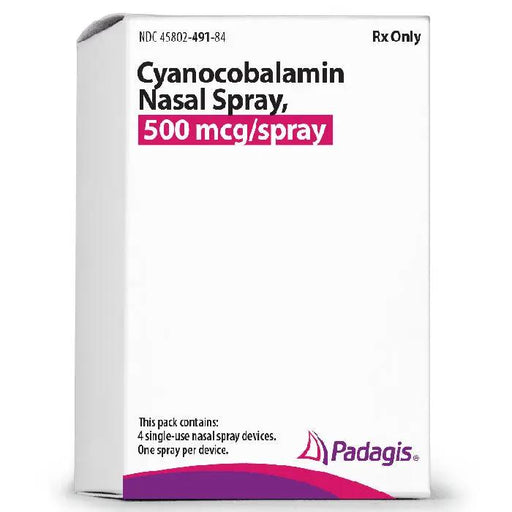
- Nasal spray (typically cyanocobalamin in a measured dose)
- Oral tablets (high-dose B12 can rely on passive absorption)
- Injection (B12 given intramuscularly or as directed by a clinician)
Quality standards and practical checks:
- Look for clear labeling of the B12 form (cyanocobalamin vs methylcobalamin).
- Choose products that state dose per unit (mcg) and dosing frequency.
- Prefer brands that share testing details (for example, third-party verification or batch testing statements).
- Be cautious with “stack” products that mix many nutrients without explaining why.
- If you’re using B12 to correct deficiency, align your product choice with your actual plan (and ideally labs).
Also, if you’re considering injections: a clinician’s prescription, proper administration, and appropriate monitoring are part of the “quality” equation—not just the vitamin itself.
Comparison of Common Options
A consumer-oriented comparison (typical patterns, not medical prescriptions):
| Format | Typical Dose/Use | Pros | Cons | Cost | Best For |
|---|---|---|---|---|---|
| Oral tablets (high-dose) | Often 500–2000 mcg daily or several times weekly (varies by product) | Convenient, non-invasive, easy to adjust | May be less reliable if absorption is severely impaired; improvement isn’t instant | Low to mid per month (brand dependent) | Diet-related low intake, mild/borderline cases |
| Sublingual B12 | Often 500–2000 mcg daily (under-tongue) | Convenient; some people prefer it over swallowing | Not automatically “stronger” than oral; evidence varies by scenario | Mid per month | People who dislike tablets, want a routine |
| Nasal spray | Measured mcg per spray; often daily or as directed | Needle-free; easy administration | Some people find consistency harder; variable comfort; product-specific dosing | Mid to higher per month | Needle-averse users; seeking an alternative to injections |
| B12 injections (clinician administered) | Dosing schedule varies; often weekly then spaced out (doctor-directed) | Useful when absorption is impaired; can be part of a structured plan | Relies on clinic visits/proper administration; local discomfort; can be costly | Often higher due to visits and supplies | Suspected malabsorption or clinician-confirmed need |
| B12 “complex” supplements (with cofactors) | Varies; may include folate, iron, or other nutrients | May support overall nutrition if multiple things are low | Harder to pinpoint what helped; can complicate side effects or dosing focus | Mid to high per month | When labs show multiple deficiencies or dietary gaps |
Buying Framework and Red Flags
If your doctor is reluctant to prescribe B12 injections, you don’t need to “win” the argument—you need a safer decision framework.
- Start with labs: aim for B12 plus related markers when appropriate (your clinician may suggest methylmalonic acid, homocysteine, or CBC depending on your case).
- Match the route to the reason: if absorption is impaired, injections may be more relevant than relying on gut uptake.
- Choose dose realistically: avoid extreme trial-and-error. A structured 2–8 week window with monitoring is more sensible than indefinite guessing.
- Track symptoms without overpromising: fatigue, sleep quality, and cognition are influenced by many factors.
- Watch for red flags: numbness/tingling, worsening neurologic symptoms, unexplained weight loss, severe anemia signs, or symptoms that don’t fit B12 deficiency—these are “stop self-adjusting and get evaluated” signals.
Red flag checklist (use this like a consumer safety screen):
- You’re using B12 injections or supplements without any lab context and symptoms are progressing.
- You have neurologic symptoms that are worsening (numbness, balance issues, persistent tingling).
- You feel no improvement after a reasonable trial while lifestyle factors remain unchanged.
- You’re combining multiple products (B12 + complexes) and can’t tell what dose you’re actually getting.
- You have anemia concerns, GI surgery history, or long-term medication use that may affect absorption—yet you’re self-treating blindly.

Common Mistakes and How to Avoid Them
The biggest mistake people make when they’re wondering “why are doctors reluctant to prescribe B12 injections” is treating B12 like a shortcut for any kind of fatigue. Fatigue is common at 35–44—stress, sleep debt, iron status, thyroid issues, and depression can look similar.
Avoid these common missteps:
- Self-prescribing injections without a plan. If you’re going to use injections, let a clinician guide dosing and monitoring.
- Using the wrong comparator. Example: if you switch from injections to oral, give enough time for a fair comparison.
- Skipping absorption considerations. If your clinician suspects malabsorption, oral may not be enough.
- Ignoring cofactors. Some people need a broader nutritional or medical evaluation rather than only B12.
- Overrunning the trial. If there’s no change after a structured period, don’t keep adding—reassess the cause.
FAQ
Is it proven that B12 injections help when doctors are reluctant to prescribe B12 injections?
Evidence supports that correcting true B12 deficiency can improve relevant blood markers and may help certain symptoms. However, improvement depends on whether you actually have a deficiency and on your underlying cause, which is one reason clinicians may be selective about B12 injections.
How long does it take for B12 injections to work compared with oral B12 when doctors are reluctant to prescribe B12 injections?
Timelines vary. Some blood markers may change within weeks, while fatigue or neurologic symptoms may take longer and aren’t guaranteed to improve. A realistic consumer expectation is to reassess over several weeks rather than days.
What side effects should I expect if I start B12 injections for borderline labs after reading why doctors are reluctant to prescribe B12 injections?
Many people tolerate B12 well. Possible issues include injection-site discomfort or irritation. If you develop new or worsening neurologic symptoms, allergic-type reactions, or feel significantly worse, stop the self-plan and seek medical guidance.
Can I combine B12 injections with oral B12, and is it a bad idea if doctors are reluctant to prescribe B12 injections?
Combining routes isn’t automatically “wrong,” but it can raise the total dose quickly and makes it harder to know what’s helping. It’s best discussed with a clinician—especially if you don’t have confirmed deficiency or your labs aren’t clear.
What’s better, oral B12 or injection for the question “why are doctors reluctant to prescribe B12 injections” when alternative formats are available?
Oral B12 can work for many people, and it’s often a first-line approach when absorption appears intact. Injections may be preferred when absorption is impaired or when a clinician determines a structured injection plan is appropriate. Alternatives like nasal sprays may suit needle-averse users, but outcomes depend on product formulation and dose consistency.
A Practical 2-Week Experiment Framework
If you’re trying to make sense of why doctors are reluctant to prescribe B12 injections, use the next two weeks to gather decision-quality data—without treating it like a cure test. The goal is to reduce guesswork.
- Day 1: Baseline. Record sleep hours, energy level (0–10), and one symptom you care about most (fatigue, focus, tingling). Also note diet and any alcohol changes.
- Days 2–14: One change only. Start only one B12 route/product (oral, sublingual, nasal, or clinician-directed injection). Avoid stacking new supplements during this window.
- Keep dose consistent. Use the label directions exactly (or clinician plan). If you miss doses, log it rather than “doubling up.”
- Watch for side effects. Note any GI upset, headache changes, rash, or injection-site reactions if applicable.
- End of week 2: Review. If you feel clearly worse, stop and seek help. If you feel only slightly different, don’t interpret that as proof—fatigue recovery is often slower than expected.
- Plan follow-up. If there’s no improvement by the end of a longer clinician-guided trial (often several weeks), reassess the underlying cause and consider labs.
This approach is intentionally cautious: it aims to help you decide what to do next based on your response and safety signals—rather than chasing a “B12 injection” outcome because it sounds decisive.
About the Author
I’m Jordan Malik, a consumer-health writer who focuses on evidence-aware supplement reviews and appointment preparation for men in midlife. My background includes several years of reviewing labeling, dosing patterns, and real-world user experiences (including how people respond over 2–8 week windows), with a strong emphasis on “what to measure” instead of “what to hope.”
Disclaimer: This article is for informational purposes and reflects a consumer-style review approach, not medical advice. If you’re dealing with symptoms, lab abnormalities, anemia concerns, or neurologic changes, work with a clinician—especially when considering B12 injections and dosing schedules.
Discussion